
The Tasmanian State Service Graduate Development Program (TasGraD) is a two-year program designed to equip the next generation of public sector professionals with the skills, experience and confidence to thrive in their Tasmanian State Service (TSS) careers.
TasGraD provides graduates with a strong foundation of transferable capabilities through a blend of formal learning (coordinated by the TTC) and practical, on-the-job experience across participating agencies. The program is designed to support graduates as they build their professional identity, expand their networks, and contribute meaningfully to the work of the TSS.
Throughout the program, graduates will:
- develop clear, confident and effective communication skills
- build their personal brand and broaden their professional network within the TSS
- understand the attributes of high-performing teams and strengthen their collaboration skills
- apply design thinking to analyse challenges and deliver innovative solutions
- cultivate self-awareness, resilience and confidence to thrive in a dynamic public sector environment.
Visit the Tasmanian Government Jobs website to learn more about how to apply for the program.
2026 TasGraD Learning program
Workshop 1: Unscrambling government: how government works
 26 March 2026
  9:00am –12:30pm
Starting your career in the public sector is exciting — you’re stepping into a system that helps shape the way our communities live, work and thrive. But government can sometimes feel complex or even a little mysterious.
This workshop is designed to ‘unscramble’ how government works, helping you understand the bigger picture and how your role fits into it. You’ll explore how the Tasmanian State Service supports government, how decisions are made, and how different levels of government work together to serve the public.
From the Constitution to the Parliament and through to Cabinet processes and ministerial accountability, this session will help you build a strong foundation for your work and future career in the State Service.
What you will learn
By the end of this session, you will be able to:
- Understand how government operates in practice
- Describe the role and structure of the Tasmanian Parliament
- Summarise key aspects of the Australian Constitution
- Explain the three tiers of government and how they connect
- Understand the roles of Cabinet, Ministers and ministerial offices
- Recognise the importance of the separation of powers
- Understand your responsibilities as a public servant.
Meet your trainer
 Greg Masters (Nexus Management Consulting)
Greg is an engaging and energetic facilitator with over 30 years’ experience consulting for government and community sectors. He specialises in strategic planning, program evaluation and management review to help organisations change for the better. Greg has a masters degree in public management, an honours degree in psychology and, prior to establishing Nexus in 1996, held a number of senior management and executive positions in NSW Government agencies.
Workshop 2: DiSC - thinking and communication preferences
15 April 2026 9:00am – 4:00pm
Understanding yourself and how you connect with others is key to building strong, positive relationships at work. This interactive workshop uses the DiSC model — a simple, powerful tool that helps you explore your thinking and communication preferences and how they influence your workplace interactions.
Through a short self-assessment, you’ll discover your personal DiSC style and learn about the four behavioural styles: Dominance, Influence, Steadiness, and Conscientiousness. You’ll see how each style brings unique strengths and how understanding these differences can help you communicate more effectively, reduce conflict, and work better with others.
After the workshop, you’ll also have access to an online resource portal to continue exploring and applying what you’ve learned.
What you will learn
By the end of this session, you will be able to:
- Identify your own DiSC style and workplace priorities
- Recognise the similarities and differences between styles
- Understand how different styles influence communication and teamwork
- Develop strategies to adapt your approach and build stronger relationships
- Apply the DiSC model to create more effective, enjoyable interactions at work
Meet your trainer
 Rachel Moore (Rachel Moore Consulting)
Rachel is a highly experienced trainer and accredited International Coach Federation (ICF) coach with over 20 years’ experience across a range of industries. Among her extensive list of qualifications, she has a Graduate Certificate in Management Learning, a Certificate IV in Workplace and Business Coaching, and long list of certifications which she integrates into her practice. Rachel is dedicated to empowering professionals and organisations through professional development, leadership coaching, and emotional intelligence. She is highly regarded for her ability to create supportive environments where individuals feel empowered to thrive.
Workshop 3: Introduction to trauma
1 May 2026 9:30am - 4:30pm
More and more government, business and community services are embracing trauma-informed approaches to create safer, more supportive environments. As public sector professionals, it’s important to understand how our actions and interactions can impact others — especially those who have experienced trauma.
This workshop introduces the core concepts of trauma and how it affects the body, brain and behaviour. You’ll explore why a trauma-informed approach is essential in the workplace, and how it can strengthen your communication, support wellbeing, and improve outcomes for your colleagues and the community you serve.
What you will learn
By the end of this session, you will be able to:
- Increase your understanding of trauma and its effects
- Recognise the importance of a trauma-informed approach
- Identify factors that contribute to the prevalence of trauma
- Understand how trauma impacts the body and brain
- Learn about the polyvagal theory and its connection to trauma
- Recognise the links between intersectionality and trauma
Meet your trainer
 TBC (Lifeline Tasmania)
Lifeline Tasmania have a team of highly skilled trainers who understand the challenges that surface when discussing sensitive topics. However, they also recognise that these are conversations worth having because ‘the power of conversation can change lives and save lives’. That’s why the Lifeline Tasmania training and support team is dedicated to helping Tasmanian’s develop confidence in having conversation skills that save lives.
Support
If anything in this workshop raises issues for you, you can reach out to the following services:
- Your agencies Employee Assistance Program
- Lifeline (13 11 14) or Crisis Chat Support
- Access Mental Health (1800 332 388)
- 13YARN (13 92 76)
- MensLine Australia (1300 789 978)
- QLife (1800 184 527)
If you are experiencing an emergency, call 000
Workshop 4: Preparing documents for decision makers
13 May 2026 9:00am – 4:30pm
Throughout your public sector career, you will likely prepare or assist on a range of documents that inform decisions, such as reports, briefing notes, policy papers, business cases and even emails. Well-crafted documents support better decision making and, ultimately, better outcomes for the Tasmanian community.
Writing for government is different from writing at university. It’s about providing evidence-based advice that is clear, concise and purposeful.
This workshop will help you understand what decision makers need and how to present information that supports sound, timely decisions. You’ll learn how to clarify key insights, structure your ideas logically and communicate more effectively — making the process of writing for government easier.
What you will learn
By the end of this session, you will be able to:
- Research, compile and edit information to support quality decisions
- Use a clear, consistent structure for preparing documents
- Write with clarity by simplifying complex information into clear, compelling messages
- Develop your own approach to preparing documents
Meet your trainer
 Mark Priadko (A Breath of Fresh Air)
Mark brings deep experience in government decision-making and public sector financial management. He’s worked with clients across all levels of government as well as universities, private organisations and not-for-profits, helping them prepare submissions, business cases and reports. With an Honours degree in Economics and a Graduate Diploma in Marketing, Mark has held executive roles in the South Australian Department of Treasury and Finance, led teams at BHP Billiton, and now works as a highly regarded consultant and trainer.
Workshop 5: Project management essentials
16 June 2026 9:00am – 4:30pm
Projects are at the heart of how government delivers change — from improving services to implementing new policies and programs. Understanding how projects work, and how they differ from day-to-day operations, is a valuable skill for anyone starting out in the public sector.
This workshop introduces the fundamentals of project management and gives you practical tools to plan, manage and deliver successful projects. You will learn how to define project goals, engage stakeholders, manage risks and monitor progress. You’ll build the skills and confidence to contribute effectively to any project team.
What you will learn
By the end of this session, you will be able to:
- Identify the key differences between projects and routine operational work
- Understand how projects are scoped and defined
- Prepare high level work plans and broad resource estimates
- Understand core accountabilities and key elements of project governance
- Identify stakeholders and develop engagement strategies
- Develop and implement risk mitigation strategies
- Understand how to monitor the progress of a project
Meet your trainers
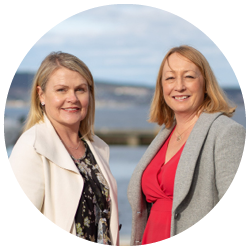 Sharyn White and Kath Wilson (LeftField Project Solutions)
Sharyn is a principal consultant at LeftField Project Solutions who works with a variety of organisations locally and inter-state across the private and public sectors. With a background in the information technology space, Sharyn now works on a wide variety of business projects, with a particular interest in the people side of projects and those that make a difference to the Tasmanian community.
Kath is a project and change management specialist with over 20 years’ experience in delivering projects for the government, not-for-profit and private sectors. A highly engaging trainer and facilitator, Kath combines her extensive professional experience with her passion for storytelling to bring theory to life in every session.
Workshop 6: Introduction to public sector finances
7 July 2026 9:00am – 4:30pm
Nothing is achieved in government without appropriate resourcing and active management of public funds. In an environment of constrained budgets and increasing community expectations, knowing how to prioritise, allocate and monitor resources is a critical skill for public sector employees.
This workshop provides an essential foundation for your career in government, strengthening your confidence, accountability, and decision-making when working with public resources. You will develop an understanding of how public finances are managed under the Financial Management Act, Treasurer’s Instructions, and agency-specific policies and procedures, and learn how to apply better-practice approaches to achieve efficient, effective, and economical use of public funds.
Following the theory component, you will apply your learning to a practical, workplace-based project. This hands-on experience is supported with individualised feedback from the facilitator. You will also have the opportunity to participate in a follow-up online session showcasing selected projects, allowing you to learn from the approaches and initiatives of your peers across different agencies.
Online follow up session: 2 September 2026, 9:00am-12:30pm
What you will learn
By the end of this session, you will be able to:
- Identify the legislative and financial framework applicable to your organisation and your responsibilities within them.
- Describe the key principles for managing public finances - accountability, transparency and integrity.
- Identify how the controls over the management of public finances assist to achieve the key principles.
- Understand how the key principles and controls are applied for efficient, effective and economical use of public finances, including:
- procurements and grants
- operating expense (OPEX)
- capital expenditure (CAPEX) budgets.
- Interpret and apply key accounting principles and practices used in budgeting, recording and reporting on public finances through a workplace-based project.
Meet your trainer
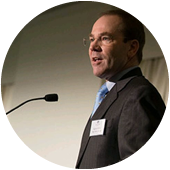 Kevin Riley (Capital Training)
Kevin brings over 30 years of industry experience in financial management and budgeting, including extensive work with state treasury and finance departments. He also has more than 20 years’ experience delivering training in finance, strategy and management. A Fellow of both the Institute of Chartered Accountants Australia and New Zealand and CPA Australia, Kevin was recognised in 2022 as a National Fellow of the Institute of Public Administration Australia for his outstanding contribution to public administration. He served as their national treasurer and councillor from 2012 to 2024. In 2024 Kevin was elected as treasurer and board member of the American Society for Public Administration – International Chapter.
Workshop 7: Public policy skills
20-21 August 2026 9:00am – 4:00pm
Policy sits at the heart of good government — shaping the decisions, programs and services that impact our communities. This two-day course explores the evolving world of public policy to help you understand how effective policy is developed, tested and implemented within government.
On day one, you will explore key concepts, frameworks and tools that support good policy making, and build a practical ‘checklist’ of what to consider when developing advice. On day two, you will apply your learning through a case study, exploring real-world challenges and developing clarity around policy goals and outcomes.
By the end of the course, you will have a stronger understanding of how policy is shaped, the role of Ministers and stakeholders, and how to bring innovative, evidence-based thinking to your work.
What you will learn
By the end of this session, you will be able to:
- Understand the key characteristics of effective policy making
- Identify what Ministers value in policy advice
- Navigate the intersection between politics and policy
- Understand emerging co-design and participatory approaches to policy work
- Develop clear and achievable policy goals
- Use your policy toolkit through practical case studies and exercises
Meet your trainer
 Rhys Edwards (RDME Consulting)
Rhys is a highly experienced leader with more than 16 years’ experience at the highest levels of the public service. He’s worked across governance, central agency leadership, energy policy, industry development and major project facilitation. From 2008 to 2014, Rhys was Secretary of the Tasmanian Department of Premier and Cabinet, Secretary to Cabinet, and Tasmania’s Senior Official for the Council of Australian Governments (COAG). During this time, he helped steer the State Service through the challenges of the Global Financial Crisis and played a key role in national reforms across health, disability and education.
Workshop 8: Design thinking
16-17 November 2026 Day1: 1:30pm– 4:30pm | Day 2: 9:00am – 4:30pm
Design thinking is a creative, human-centred approach to problem-solving that helps you see challenges from new perspectives. In the state service, it offers a powerful way to tackle complex issues, improve community services, and drive innovation within government.
This hands-on workshop will give you an introduction to design thinking and equip you with practical tools to approach problems with curiosity, empathy and experimentation.
Over one and a half days, you’ll explore the design thinking process and mindset by working through a real-world challenge in a fast paced ‘design sprint’. You’ll move through each phase of the process using a range of practical tools and techniques to:
- uncover insights about a pre-determined challenge
- generate and refine innovative ideas
- build and test a simple prototype with your peers.
By the end of the workshop, you’ll have a strong foundation in design thinking and the confidence to start applying it to your next problem.
What you will learn
By the end of this session, you will be able to:
- Explain what design thinking is and why it matters
- Identify key concepts, terms, and stages in the design thinking process
- Analyse how design thinking can be applied to complex, real-world problems
- Adopt a design thinking mindset
- Use design thinking tools and techniques to generate ideas and develop innovative solutions.
Meet your trainer
 TBA - University of Tasmania (UTAS)
The UTAS short course team works collaboratively with colleagues across the University of Tasmania to develop and deliver a broad range of in-demand and high-quality short courses and micro-credential programs that contribute to the upskilling/reskilling of their learners.
Workshop 9: Getting to and through Cabinet
28 October 2026 9:00am – 4:00pm
Cabinet is at the centre of government decision making. It's where Ministers discuss, debate and determine the direction of government. Established by convention rather than the Constitution, Cabinet decides which legislation, programs and policies move forward in Tasmania. Its processes are guided by principles of collective responsibility and confidentiality to enable open discussion and sound decisions.
This workshop takes you behind the scenes to give you an understanding of how Cabinet operates and how to prepare high-quality advice that supports decision making. You will learn when and how matters should go to Cabinet, what makes strong Cabinet submissions, and how to frame your advice clearly and effectively.
Developed by experienced policy professionals and people with first-hand Cabinet experience, this interactive session offers practical insights and tools you can use in your day-to-day work.
What you will learn
By the end of this session, you will be able to:
- Understand Cabinet processes, timelines and conventions
- Recognise the key characteristics of effective Cabinet advice
- Understand the need for well-structured Cabinet minutes in plain English
- Understand quality expectations from Treasury and DPAC perspectives
- Appreciate Cabinet’s role in intergovernmental processes
- Understand what Ministers look for in well-prepared submissions
- Provide strategic, high-quality advice to support Cabinet decision making
Meet your trainer
Rhys Edwards (RDME Consulting)
Rhys is a highly experienced leader with more than 16 years’ experience at the highest levels of the public service. He’s worked across governance, central agency leadership, energy policy, industry development and major project facilitation. From 2008 to 2014, Rhys was Secretary of the Tasmanian Department of Premier and Cabinet, Secretary to Cabinet, and Tasmania’s Senior Official for the Council of Australian Governments (COAG). During this time, he helped steer the State Service through the challenges of the Global Financial Crisis and played a key role in national reforms across health, disability and education.
Workshop 10: Shaping your career
18 November 2026 9:00am – 4:30pm
Starting your career is an exciting time, but it can also raise important questions about direction, growth and long-term fulfilment. This highly practical and engaging workshop will help you step back, reflect, and take ownership of your career as it develops.
You will gain clarity about what matters to you, where you want to go, and how to keep your career healthy over time. You will explore how to make informed career decisions, adapt as your interests and circumstances change, and continue working on your career – not just in it.
This fast-paced, interactive session encourages creativity, reflection and collaboration, with plenty of opportunities to work in pairs and small groups. Optional pre-session activities will be provided to deepen your insights and enhance the workshop experience.
What you will learn
By the end of this session, you will leave with:
- A clear sense of your current career direction
- A personal career purpose statement
- A five-year career aspiration
- 12 personal career criteria to assess future opportunities
- A practical six-month action plan
Meet your trainer
 Katherine Street (People Flourishing)
Katherine supports people to build purposeful, confident careers that help them flourish. A Professional Credentialed Coach (PCC), ACE Certified Coach and Certified Positive Intelligence Coach, she has over 20 years’ experience guiding career and leadership transitions. She is known for her work with emerging and senior leaders seeking to lead with courage, originality and a bit of spark. Katherine delivers the Career CALM program, teaches Science of the Resume, facilitates the Positive Intelligence® Mental Fitness program, and is the author of In the Loop of a Flourishing Career – a practical resource designed to support career development and job selection success.
Resources
Information for TasGraD participants and leaders:
Program support
For all learning and development program enquiries, please contact us at TSS.Gradprogram@dpac.tas.gov.au or Phone: 6232 7511.
For placement related enquiries, please contact your agency graduate coordinator.
For information about the recruitment process, please contact the State Service Management Office at Graduaterecruitment@dpac.tas.gov.au